


Prosthetic Crowns
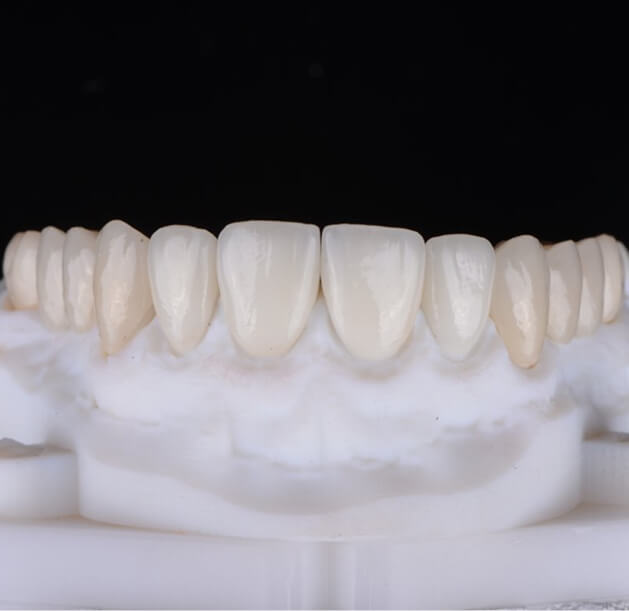
Table of contents
- What are prosthetic crowns?
- Types of dental crowns
- Crown placement procedure
- How much do crowns cost?
- Prosthetic crown prices
- Pricelist

What are prosthetic crowns?
A prosthetic crown is a type of dental restoration designed to rebuild a tooth that has been severely damaged due to decay, trauma, or root canal therapy. Placing a crown not only restores function—allowing you to bite and chew like with a natural tooth—but also enhances aesthetics, significantly improving the appearance of your smile.
Choosing a high-quality crown is an investment in both the health and beauty of your smile.
Types of dental crowns
Prosthetic crowns cover the damaged tooth’s root entirely. By using top-grade materials, the dentist can recreate the natural appearance of the tooth and reinforce its structure when weakened.
Crowns are typically used when composite fillings cannot restore the tooth. Materials used include:
- Full-ceramic (porcelain) crowns — preferred for front teeth due to their superior aesthetics.
- Porcelain crowns on a zirconia base — biocompatible, very durable, and aesthetically pleasing.
- Porcelain-fused-to-metal crowns on nickel-free metal base — slightly less aesthetic and less durable due to inability to form a strong adhesive bond with the tooth.
Crowns can also be classified by reconstruction type (full, partial, protective crowns), construction, and placement (supragingival, subgingival, and equigingival).
Modern ceramic and zirconia crowns are the gold standard in aesthetic dentistry—offering remarkable durability, biocompatibility, and a natural appearance indistinguishable from a real tooth. Especially for front teeth, porcelain and zirconia crowns match the color and texture of your natural teeth with no gum discoloration risk. Unlike older metal-based crowns that could trigger allergies, these modern materials are biologically inert. Their smooth surfaces also minimize wear of opposing teeth—crucial for long-term comfort and chewing efficiency.
Crown placement procedure
Crowns are placed on prepared supporting teeth or implants, depending on the remaining tooth structure. The procedure is performed under local anesthesia. The length and complexity depend on how many teeth need crowns. After placement, you’ll enter a recovery phase during which you should follow your dentist’s hygiene instructions. At a follow-up visit, the stability of the prosthesis is assessed. Once healed, you can return to normal life with a restored, healthy smile.
How much do crowns cost?
Prices vary significantly depending on several factors, with the material being the most important. The least expensive option is porcelain fused to metal, though less commonly used now. Higher-end full-ceramic and zirconia crowns cost more. Patients opting for crowns on implants should expect higher expenses. Other factors include the clinic’s location, available technology, and individual patient needs.
Prosthetic crown prices
Please see our price list to find the exact cost of crowns at Esthetic Dental Studio. If you have questions about tooth crowns or wondering if they’re right for you, contact us—we’ll ensure your smile is healthy and beautiful!
Services pricelist
All‑ceramic crown (IPS e.max Press or Prettau zirconia)
Metal‑ceramic crown (nickel‑free alloy)
Composite crown (indirect, lab‑made)